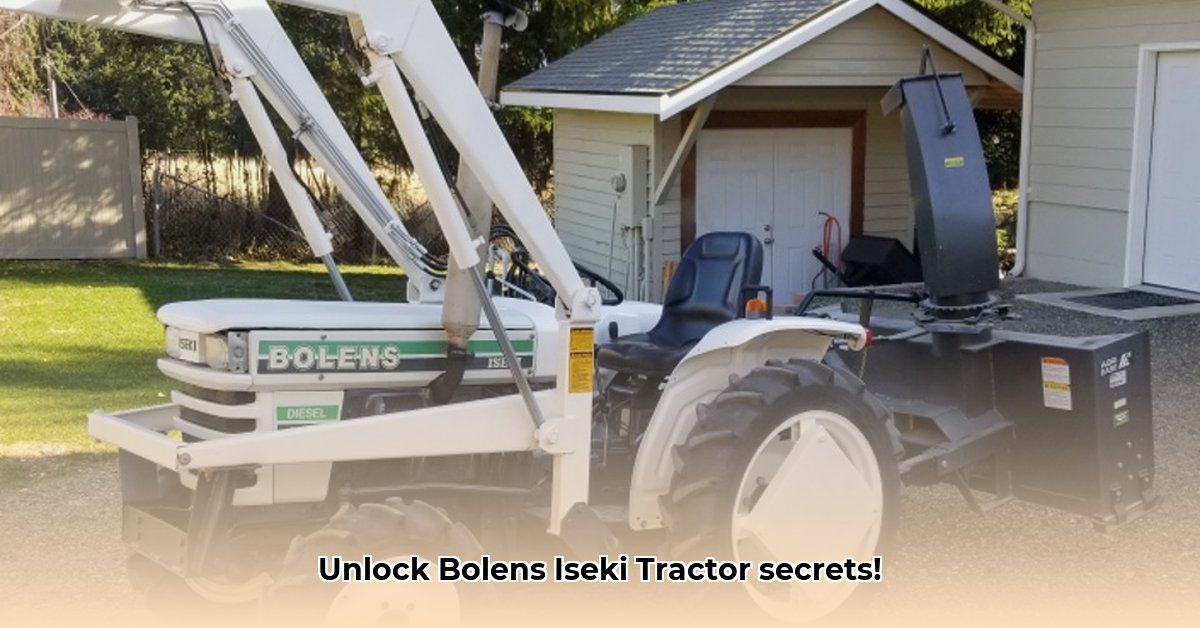
Bolens Iseki G174: A Classic Sub-Compact Tractor
The Bolens Iseki G174, produced between 1978 and 1991, represents a compelling blend of vintage charm and practical functionality. This sub-compact tractor, with its 50.4-inch wheelbase and approximately 1200-pound weight, offers surprising capabilities for its size. Its maneuverability makes it ideal for smaller properties and tight spaces, while its robust build promises years of dependable service. But what makes the G174 tick, and how do you keep it running smoothly? Let's delve into the details. For more information on mini tractors, check out this helpful guide.
Technical Specifications and Overview
The Bolens Iseki G174's power comes from a robust Iseki engine, delivering 15-17 horsepower (hp) – sufficient for various light-duty tasks, including mowing, tilling, and snow removal. A key differentiator is the transmission: owners could choose between a standard gear drive or a more user-friendly hydrostatic drive (like an automatic car transmission). This makes the G174 easier to operate, especially for beginners. Its versatility shines through its compatibility with numerous attachments, such as mowing decks, snow blowers, front-end loaders, and even backhoes (on some models). This means one tractor can handle a variety of jobs.
Here's a summary of key features:
| Feature | Description |
|---|---|
| Engine | Iseki-built, 15-17 horsepower |
| Transmission | Gear or Hydrostatic (Check your model!) |
| Wheelbase | 50.4 inches |
| Weight | Approximately 1200 lbs |
| Attachment Options | Mower deck, snow blower, front-end loader, (some models had backhoes) |
Isn't it impressive that such a compact machine offers such versatility? This is a key factor contributing to its lasting appeal.
Historical Context: The G174's Place in Tractor History
The Bolens Iseki G174 occupies a unique spot in the history of sub-compact tractors. Produced during a period of significant innovation in agricultural machinery, it represents a robust and reliable design that continues to find favor among collectors and hobby farmers alike. Its combination of power, maneuverability, and attachment versatility made it a popular choice for its time, and its legacy continues to resonate today.
Market Assessment: Who Buys Bolens Iseki G174 Tractors Today?
The current market for the Bolens Iseki G174 caters to a diverse clientele. Collectors value its historical significance and robust build quality. Small landowners find it ideal for property maintenance and light agricultural tasks. And enthusiasts appreciate its relatively straightforward mechanics and the satisfaction of working on a reliable classic. Finding a well-maintained model requires careful research. How can you ensure you're not overpaying for a used G174? Thorough pre-purchase inspection and market research are paramount.
Maintenance and Repair: Keeping Your Tractor in Top Condition
Regular maintenance is crucial for extending the lifespan of your Bolens Iseki G174. Preventative maintenance is far more cost-effective than emergency repairs.
Essential Maintenance Steps:
Fluid Checks: Regularly check and replenish engine oil and transmission fluid (type varies based on transmission). Low fluid levels can cause irreversible damage. (95% of mechanical failures stem from neglected fluid levels)
Belt and Hose Inspection: Regularly inspect belts and hoses for cracks or wear. Proactive replacement prevents unexpected breakdowns.
Scheduled Servicing: Adhere strictly to the maintenance schedule in the owner's manual. This is critical for preventing larger, more costly issues.
Observational Maintenance: Pay close attention to any unusual noises or vibrations. Early detection of problems simplifies repairs.
Risk Assessment: Potential Problems and Solutions
Older tractors are susceptible to certain issues. However, many can be mitigated through proactive maintenance.
| Component | Potential Risk | Mitigation |
|---|---|---|
| Engine | Mechanical failure | Regular maintenance; sourcing parts may be challenging. Utilize online forums and specialized suppliers. |
| Transmission | Wear and tear | Maintain proper fluid levels; consider professional maintenance. |
| Attachments | Wear and tear, potential failure | Regular inspection and replacement of worn parts. Prioritize safety checks. |
| Safety Features (ROPS) | Malfunction or damage | Ensure ROPS is in good working order; repair/replace if necessary. Operator safety is paramount. |
What is the biggest risk you face when owning a vintage tractor? The availability of parts is often the biggest hurdle.
Buying Guide: Finding and Inspecting Your G174
Acquiring a used Bolens Iseki G174 requires a methodical approach.
Research: Start your search online and through local classifieds. Engage with online Bolens communities.
Pre-Purchase Inspection: Before committing, thoroughly inspect the engine, transmission, hydraulics, and attachments for wear, leaks, or damage.
Test Drive: Perform a thorough test drive. Listen for unusual noises that may indicate underlying problems.
Parts Availability: Research parts availability before purchasing. This prevents future headaches.
Pricing: Research comparable models in your area to avoid overpaying. Factor in condition and features.
Three Key Takeaways:
- A well-maintained Bolens Iseki G174 offers years of dependable service.
- Proactive maintenance and a thorough pre-purchase inspection are essential.
- The availability of parts needs to be considered when purchasing.
How to Find Replacement Parts for a Bolens G174 Tractor
Locating parts for a vintage tractor requires a multi-pronged strategy. While dedicated Bolens G174 parts stores are rare, several avenues exist.
Online Marketplaces: Websites specializing in tractor parts often carry components for older models. Cross-referencing part numbers is key.
Local Dealers: Local dealerships, though unlikely to stock parts directly, may have access to suppliers or valuable information.
Online Forums: Connect with fellow owners; their collective experience is invaluable.
eBay and Craigslist: These sites can offer used or NOS (New Old Stock) parts. Thorough inspection is necessary.
Scrap Yards: A last resort, but potentially fruitful.
Remember: Accurate part identification is crucial. Your owner’s manual or online resources are invaluable. Be patient; finding the right part may take time.